

Curated Nest Recommendation
Boutique Stays Collection
Hand-picked worldwide · Balanced comfort, $100–$300 a night
9.0 Excellent$220 / night
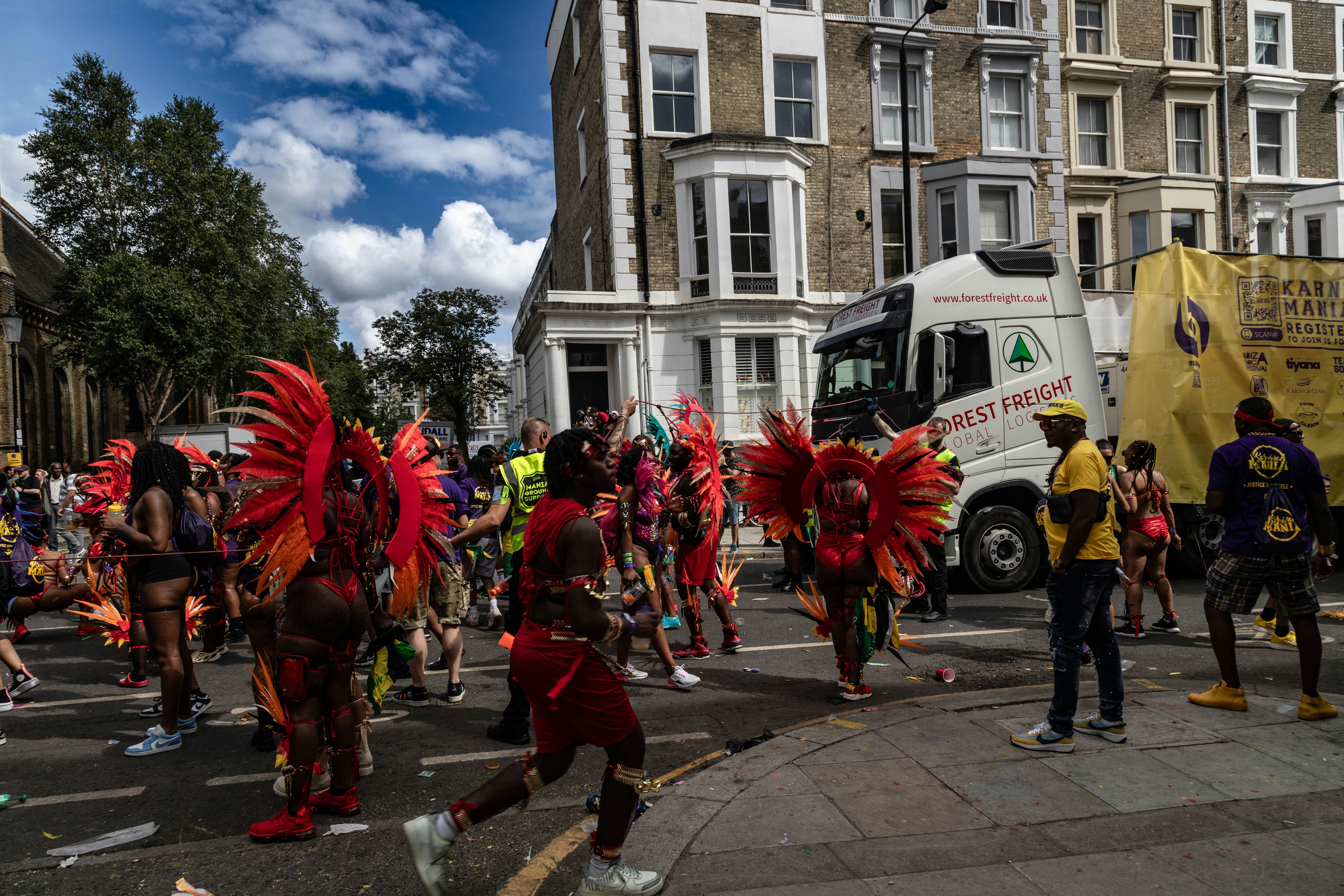
Book stayEvery August, a quiet, affluent neighborhood in West London undergoes a massive transformation. Over one million people pack into the narrow streets of Notting Hill, and the ordinary map of the city briefly becomes something else—filling the air with the scent of jerk chicken, the thunder of massive sound systems, and a sea of brightly colored feathers.
To the casual observer, it looks like Europe's biggest street party. But to an anthropologist, the Notting Hill Carnival is not reducible to spectacle. It is a living ritual—an inherited, reworked cultural technology through which a Caribbean-descended community has endured racism, stitched communal life back together, and insisted on visibility in a hostile urban landscape. It is celebration, yes. But it is also memory-making; it is healing performed in public; it is joy under pressure.
By learning the history and the cultural grammar underneath the music, you stop consuming the event as "entertainment" and begin receiving it as tradition—something carried by people, shaped by struggle, and continually renewed.
1. The 5 Ws: Why This Ritual Was Born

Small-Group Guided Tour
Top-Rated City Experiences
Skip-the-line tickets · Live guide · Small group
4.8 (100k+)$63 / person
Join the group tourTo understand the Carnival, you have to read London in the mid‑20th century—through the "Windrush context," through migration and labor, through overcrowding and the daily friction of racial hostility. Thousands of Caribbean migrants arrived in the UK to help rebuild after World War II, but the streets of West London did not become welcoming simply because people came with skills and determination. They became contested spaces where dignity had to be defended, repeatedly and publicly.
Who started it?
The Carnival is not the invention of a single person so much as the product of community leadership—activists, organizers, and musicians who created conditions for collective life to survive. Early celebrations offered a familiar language of home: indoor gatherings that held grief and hope, and later community initiatives that helped push the joy outward—turning a need for safety and belonging into something visible, organized, and shareable.
What is it?
It is a creolized ritual spectacle. That word matters. "Creolized" means the Carnival is not simply transplanted culture—it is culture transformed. It gathers strands from the African diaspora, Caribbean street festivities shaped by emancipation-era histories, and the sound-and-style of British urban youth. What emerges in Notting Hill is a distinctly London form of Caribbean expression: new, hybrid, and communal.
When does it happen?
It takes place every August Bank Holiday weekend. Anthropologically, a fixed calendar is not trivial: it creates a predictable ritual rhythm, a known pause in ordinary life. The neighborhood can brace itself, organize itself, and then—when the time arrives—become a stage for collective meaning.
Where does it take place?
It remains locked inside the tight residential streets around Notting Hill, Ladbroke Grove, and Westbourne Park. This matters. The Carnival's intimacy is part of its power: sound, movement, and crowd dynamics aren't floating "out there." They press up against houses, porches, shopfronts, and the lived geometry of a neighborhood.
Why did it start?
It began as a protective social strategy as much as a celebration. After outbreaks of racial violence and terror, community leaders used the public ritual of music, dance, and food to do something essential: make space for Black presence where the city tried to make that presence precarious. Carnival became a way to heal social fractures, rebuild confidence, and turn the street into a shared home—temporarily, fiercely, and with design.
2. The Power of the "Carnivalesque"

Local Food Experience
Signature Culinary Tours
Tastings & market walks
4.9 (24k+)$82 / person
Reserve tableAnthropologists borrow the "Carnivalesque" from Bakhtin to describe what carnival can do to a society's ordinary rules. In everyday life, power often expresses itself through rigid social order—through who gets seen, who gets obeyed, who gets policed, who gets ignored. Carnival briefly interrupts that order. It rearranges attention. It alters the logic of the street.
Temporary freedom
For two days, public space is reorganized by festival logic. The street becomes a rhythm-machine. Music coordinates movement; movement generates new social relationships; the crowd becomes a moving constellation of bodies that temporarily shares a single emotional atmosphere. The neighborhood's daily script pauses—and a ritual script takes over.
Inverting hierarchy (and exposing what lies beneath)
British society can be coded through politeness, structure, and formality; policing is never far from the margins. Carnival performs a different grammar. In "Playing Mas," in masquerade, in costume labor and embodied performance, marginalized citizens do not only become visible—they become central. Kings and queens of the street are not merely characters; they are social declarations. The hierarchy does not simply flip as fantasy—it reveals how much hierarchy depends on everyday compliance.
And still: carnival freedom has limits, and it occurs inside real urban constraints. The streets remain dense. Management remains present. Not everyone experiences "liberation" equally. That tension doesn't weaken the ritual—it clarifies it. Carnival's power comes from creating meaning inside pressure.
3. The Three Sensory Pillars for the Traveler
Carnival is magnetic because it refuses to stay cerebral. It invites the body. It builds memory through sensation—through what you see, what you hear, and what lingers on your palate.
The Visual Mas
The procession of masquerade bands delivers aesthetic shock—thousands of performers moving with shared energy, craft, and choreography that turns gray pavement into a moving gallery. "Mas" is not just decoration. It is a public display of creativity, labor, and identity—an embodied insistence that Black imagination belongs on these streets.
The Sonic Sound Systems
The sound systems are the street's architecture. Over time, fixed and massive setups helped shape how Carnival feels: not merely loud music, but an organizing force. Different sound trucks generate different emotional temperatures, drawing clusters and determining where crowds gather. Bass does something physical; it changes how bodies hold themselves, how you breathe, how you move. The heartbeat of the neighborhood becomes audible.
The Gastronomic Commons
Food makes the festival portable in memory. Jerk chicken, patties, rice and peas—these are not simply "items to try." They are culinary continuities: spice, charcoal, technique, and communal eating. The air itself becomes an invitation, a signal that you're entering a shared world where the simplest act—eating—belongs to a larger ritual of togetherness.
Achieving "Communitas" through Participation (and Responsibility)
Anthropologist Victor Turner's "communitas" describes the ecstatic closeness that can emerge in shared ritual—when identity categories temporarily soften and a common rhythm takes over. Carnival can generate precisely that atmosphere: a feeling that you are, for a moment, inside something larger than your everyday role.
Travelers often encounter communitas through two main pathways:
Somatic movement (wining)
Participation here is not only permission—it is alignment. Spectators often begin to move almost automatically, adjusting posture to match the street's dance language. Wining—the fluid rhythmic movement of hips and pelvis—becomes total physical release: the kind of stress evaporating not through denial, but through motion.
Joining the Mas Bands
You don't have to remain a watcher behind a barrier. Many travelers connect to bands through costumes and structured access, stepping into the inner logic of the celebration rather than standing at its edge. This is where communitas deepens: you don't just observe culture; you help perform the conditions that make culture possible.
Respectful Participation
Communitas is fragile; it depends on mutual respect. So participate as responsibility, not entitlement.
Treat performers as skilled workers, not as props for your photo.
Give people space to move through costume spaces and band routes.
Ask before photographing close-up moments—especially children.
Learn basic etiquette: which areas are for procession and movement, which are for spectators.
Eat as part of the shared rhythm, not as an extraction of "content."
Follow marshals, staff, and signage. Carnival is freedom—and it is also coordination.
The Anthropological Safety Playbook
Carnival is a mega-ritual unfolding inside a tight residential grid. The density can become overwhelming; movement can feel like weather—sudden surges, slow compressions, unexpected bottlenecks. To participate fully, you have to participate wisely. With a crowd this size and this dense, it's also worth knowing that the same trip protection that covers a delayed flight or a stolen bag covers the unexpected here too — one less thing to think about while you're actually present in the moment.
Crowd-smart navigation
Stay oriented. Know where the exits are before you lose your bearings. Do not fight the flow; if the crowd thickens, move with it and shift toward more open space instead of pushing against bodies.
Hearing protection
Bass is beautiful, but it is also intense. Wear earplugs that you can tolerate for hours—so you can feel the music without paying with your long-term hearing.
Departure matters
Leaving "when you're done" often means leaving when you're already tired. Plan to go earlier than you think. That small decision changes everything: it reduces stress, lowers risk, and keeps your experience intact rather than ending it in fatigue.
Pace your body
Hydrate. Watch your energy. Choose comfortable clothing because comfort is safety. Heat and exhaustion sneak in quietly, and in a crowd, quiet problems become loud emergencies.
Another City, Another Living Tradition
If this kind of deep dive into a festival's history and meaning is what draws you in — not just what to wear or where to stand, but why the ritual exists at all — Paris has its own version of the same story. Montmartre's Grape Harvest Festival began in 1933 as its own quiet act of resistance, this time against urban development rather than racial hostility, and grew into one of the city's most joyful annual traditions. Different continent, different struggle, same underlying truth: the festivals that last are the ones built on something worth defending.