
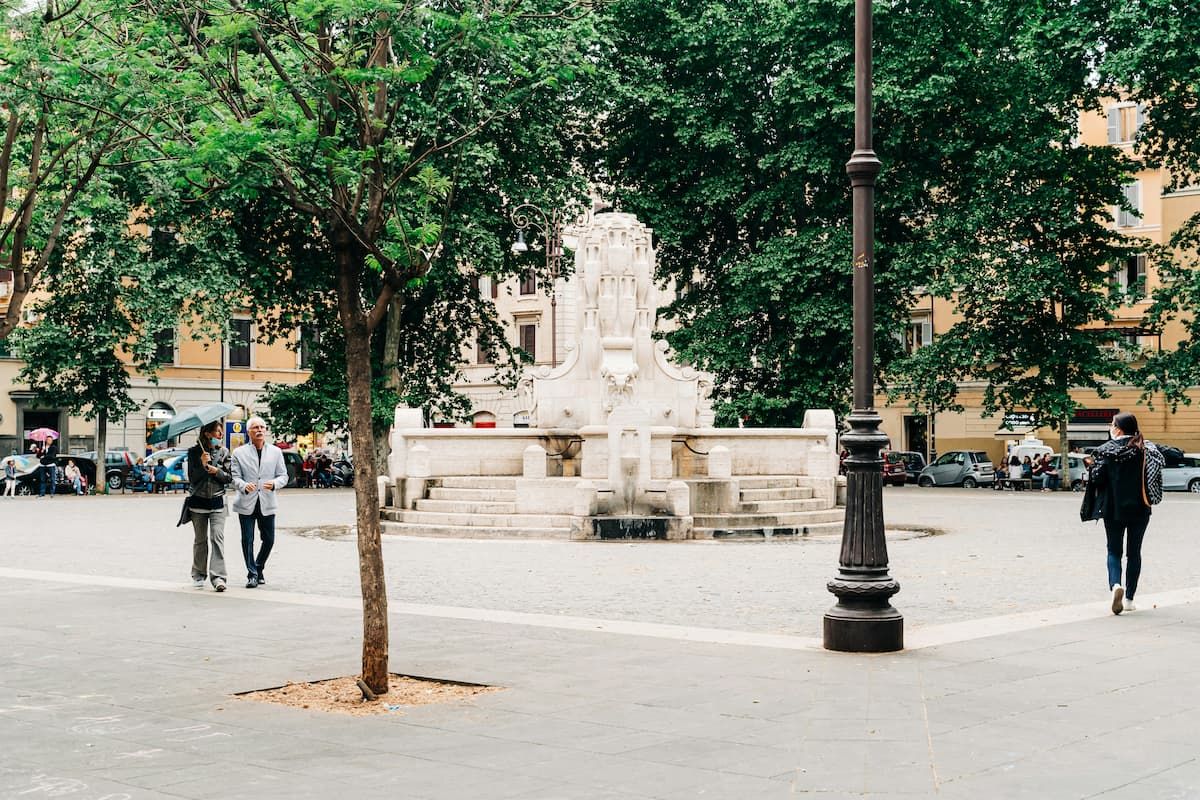
Walk through Testaccio today and you'll find buzzy trattorias, a lively food market, and bars tucked into old brick warehouses. It feels like one of Rome's coolest food-and-drink neighborhoods — and it is. But nothing you're seeing is random. Every street here carries the shape of what this place used to be — and almost everything you'll eat or drink started out as something nobody else wanted.
Where It All Started: A Slaughterhouse and a Rule Book

Curated Nest Recommendation
Boutique Stays Collection
Hand-picked worldwide · Balanced comfort, $100–$300 a night
9.0 ExcellentFrom the late 1800s until it finally closed in the mid-1970s, Testaccio was home to Rome's main slaughterhouse, the Mattatoio. Back then, meat wasn't shared out fairly — there was an actual pecking order. The best cuts went to the nobles. Next came the clergy. Then the wealthier merchant class. Then soldiers. And whatever was left after all that — basically the "fifth quarter" of the animal — went to everyone else: the workers, the poor, the people who actually did the butchering.
That leftover share had a name: quinto quarto. It sounds a little rough when you say it out loud in English — "fifth quarter" — but it's the whole reason Roman food tastes the way it does today.
What Exactly Was on the Menu
Safety & Logistics
🛡️ Verified Trip Protection
SafetyWing Global Network • 9.4/10 Rating
Comprehensive emergency medical cover, hospital stays, trip interruption and camera or laptop gear protection while you're in Worldwide — bookable in minutes, cancel any time.
So what actually counted as "leftovers"? Basically everything except the prime cuts: tripe (the stomach lining), kidneys, liver, spleen, sweetbreads, brain, tongue, tail, and feet. For lamb, there was also a combo of heart, lungs, and liver called coratella. It's not the most glamorous shopping list — but it's exactly what Roman cooks, mostly women working with very little, turned into some of the city's most-loved dishes.
How "Leftovers" Became Some of Rome's Best Dishes
Slaughterhouse workers were often paid partly in offal instead of cash. So they'd bring it home, or sell it to the little taverns nearby. And from there, a few specific dishes were born:
- Coda alla vaccinara — oxtail, slow-cooked for hours until it falls off the bone
- Trippa alla romana — tripe simmered in a rich tomato sauce
- Rigatoni con la pajata — pasta with calf intestine
- Coratella con carciofi — lamb heart, lungs, and liver, cooked with artichokes
- Animelle — sweetbreads, often just pan-seared simply
None of it was fancy food. It was food made out of necessity — and it just happened to be amazing.
The Hill Made of Broken Pots — and Where the Nightlife Comes From
Testaccio has another origin story too, even older than the slaughterhouse. The neighborhood is built around Monte dei Cocci — literally a hill made from centuries of broken clay jars, mostly used for shipping olive oil from Spain up the Tiber to Rome's ancient river port. Once emptied, the oil had soaked into the clay so deeply that the jars couldn't be reused or even cleaned properly, so Romans just smashed them and stacked the pieces here, layer after layer, for centuries. There are millions of them in there.
Here's the fun twist: the caves and old warehouses dug into and built around this hill, once used to store goods, are now some of Rome's best-known nightclubs and bars. Via di Monte Testaccio is genuinely one of the city's main nightlife strips — people come from all over Rome to drink and dance in spaces that used to be storage for Roman shipping two thousand years ago. It's the same pattern as the food: something practical and a little unglamorous became one of the neighborhood's biggest draws.
The Market: Where the Old Neighborhood Still Lives
If you want to see Testaccio's food culture in its most everyday form, go to the Nuovo Mercato di Testaccio. The current building opened in 2012, replacing the old neighborhood market that had stood nearby since the slaughterhouse days — it's a strikingly modern, geometric structure powered largely by rooftop solar panels, and it was deliberately designed with input from the market vendors themselves so the community it served wouldn't be disrupted by the move. Beyond fruit, vegetables, meat, and fish, it's also become one of the best spots in Rome for cheap, excellent street food — panini stuffed with slow-cooked Roman classics, plenty of it still drawing straight from the quinto quarto tradition. It's a genuinely local spot, not a tourist market, which makes it one of the easiest ways to see how this neighborhood actually eats day to day.
From Working-Class Ghetto to "The Capital's Village"
Testaccio's identity didn't happen by accident — it was planned. After Rome became Italy's capital in 1871, the city deliberately built Testaccio as its industrial, working-class district. For decades that meant real hardship — sociologist Irene Ranaldi's book Testaccio: Da quartiere operaio a Village della capitale traces the neighborhood's full journey from a genuinely rough, overlooked working-class "ghetto" into what it's become today: an attractive, resource-rich pocket of the city full of restaurants, art spaces, and nightlife.
One academic source studying the area's character even suggested Testaccio might be one of the last Roman neighborhoods where a real "genius loci" — the spirit of a specific place — still genuinely means something, though it wondered how much longer that might last as the neighborhood keeps changing. That's worth sitting with next time you're there: the trattorias, the market, and the clubs you're enjoying all exist on top of generations of real, hard, working-class history, not instead of it.
Worth knowing: unlike our piece on Sunday Lunch in Rome, which draws on academic research into Italian family life, this one leans more on documented social and urban history — Testaccio's story has been genuinely well studied by sociologists like Ranaldi, just from a different angle than family ethnography.
If You Want to Try It Yourself
The easiest, lowest-pressure way in is the Mercato di Testaccio itself — a real local food market, not a tourist show, where you can see these ingredients up close without committing to a full meal. If you do want to sit down for the real thing, Checchino, a restaurant that's been open right by the old slaughterhouse gates since 1887, is closely tied to popularizing coda alla vaccinara — it's one of the best-known spots to try it, even if the exact story of who invented it is fuzzier than people like to claim. And once the sun goes down, Via di Monte Testaccio is the natural next stop if you want to see the neighborhood's other side.
Sources
- Ranaldi, I. (2012). Testaccio: Da quartiere operaio a Village della capitale. Franco Angeli.
- Società Geografica Italiana — neighborhood history and "genius loci" discussion